
Xavier Cugat
Bandleader who popularized Latin music in the United States.

Mario Monicelli · Public domain
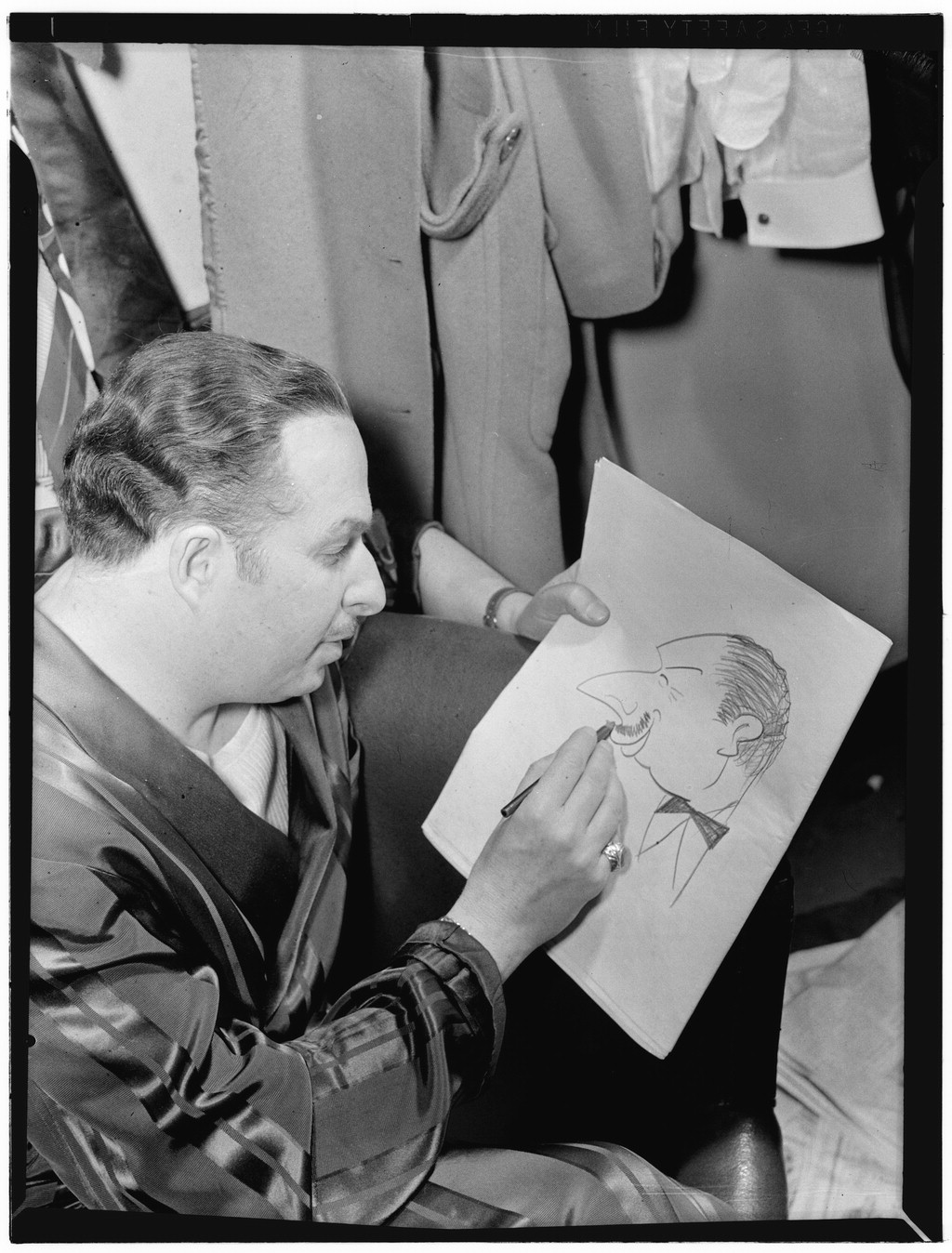
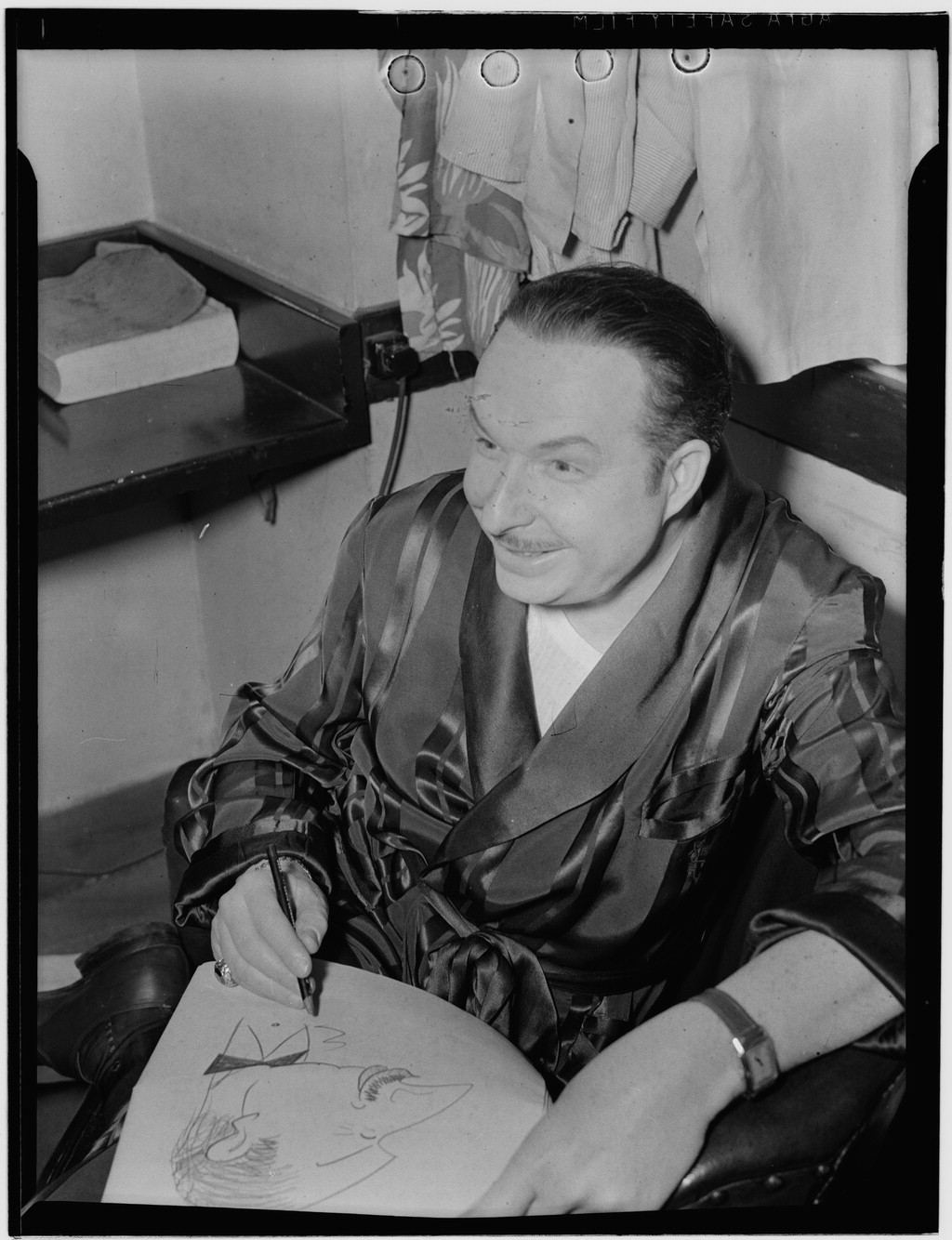
Xavier Cugat (1 January 1900 – 27 October 1990) was an American musician and bandleader who helped popularize Latin music across the United States. He was born in Girona, Catalonia, Spain, and moved to Havana, Cuba, as a young child. He arrived in New York City in 1915. A classically trained violinist and arranger, Cugat led the Waldorf–Astoria hotel’s resident orchestra from 1933 to 1949 and recorded prolifically for four decades. He earned the nickname “Rumba King.” He also ran restaurants in West Hollywood and New York, appeared with his band in many films during the 1930s and 1940s, and worked as a caricature artist.
Cugat was born Francesc d'Assís Xavier Cugat Mingall de Bru i Deulofeu in Girona on 1 January 1900, and identified as Catalan throughout his life. His family moved to Cuba when he was three. He studied classical violin and, at age nine, played in a silent movie theater to help pay for his schooling. He became first violinist for the Teatro Nacional Symphonic Orchestra in Havana and began drawing caricatures in his spare time. He arrived in New York City with his family on 6 July 1915 aboard the SS Havana. Cugat often embellished his biography for self-promotion, making facts hard to verify. For instance, he claimed to have befriended and performed with Enrico Caruso in Havana, but Caruso did not visit until 1920. He also said he was married to Cuban musical star Rita Montaner from 1918 to about 1920, but a well-sourced biography of Montaner disproves this.
From the late 1910s into the early 1920s, Cugat pursued a career as a violinist, though it proved difficult. He performed at Carnegie Hall in 1920 and 1922, and in 1921 he played on WDY radio in Camden, New Jersey, becoming one of the first solo musicians on radio. In the early 1920s he traveled to Europe for further violin study, giving recitals across the continent, including a tour of Spain in fall 1924. Disappointed with his prospects as a classical violinist, he returned to New York and took a job assisting an art and antiques dealer. He drove a carload of paintings to Los Angeles and worked at a gallery there around 1924–1925.
In Los Angeles, Cugat was a featured soloist with the Los Angeles Philharmonic, but his classical career stalled. Around 1924–1925 he began working as a caricaturist for the *Los Angeles Times*, and his drawings were nationally syndicated. Starting in Novemb
- born
- 1 January 1900, Girona, Catalonia, Spain
- died
- 27 October 1990
- field
- Music, bandleading, caricature
- nationality
- American (naturalized)
- known_for
- Spreading Latin music in the U.S.; leader of Waldorf–Astoria Orchestra; 'Rumba King'
Lore & Background
Xavier Cugat was born Francesc d'Assís Xavier Cugat Mingall de Bru i Deulofeu in Girona, Catalonia, Spain. His family immigrated to Cuba when he was three. He studied classical violin and worked as a violinist at age nine in a silent movie theater. He was first violin for the Teatro Nacional Symphonic Orchestra in Havana and began drawing caricatures. On 6 July 1915 he and his family arrived in New York City. Cugat regularly embellished his life history as a strategy of self-promotion; for example, he claimed friendship with Enrico Caruso in Havana and a marriage to Rita Montaner, both shown by later analysis to be impossible.
In Los Angeles he was a featured soloist with the Los Angeles Philharmonic. His career as a classical violinist not going well, he worked for the Los Angeles Times as a caricaturist around 1924–1925. His caricatures were nationally syndicated. Assigned to draw Dolores del Río, he accidentally drew her double, Carmen Castillo, whom he later married. By the late 1920s his band played at the Cocoanut Grove. Charlie Chaplin visited to dance the tango, so Cugat added tangos and hired South American dancers. In May 1928 he turned his act into a short film, 'Xavier Cugat and His Gigolos.'
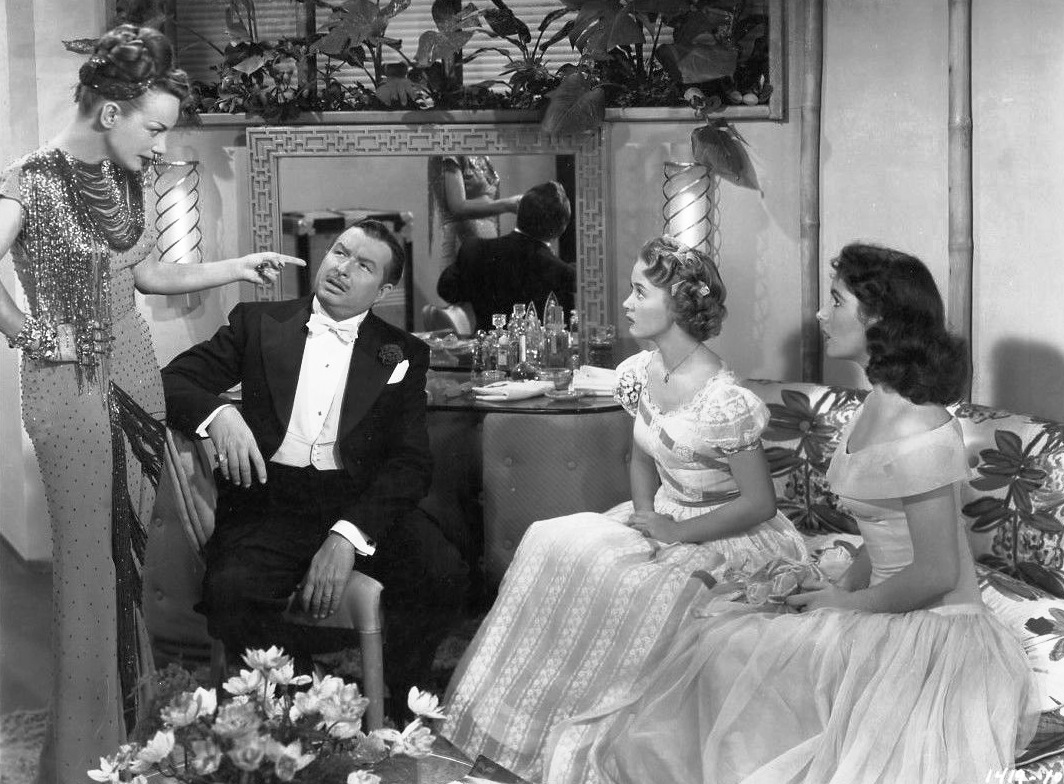
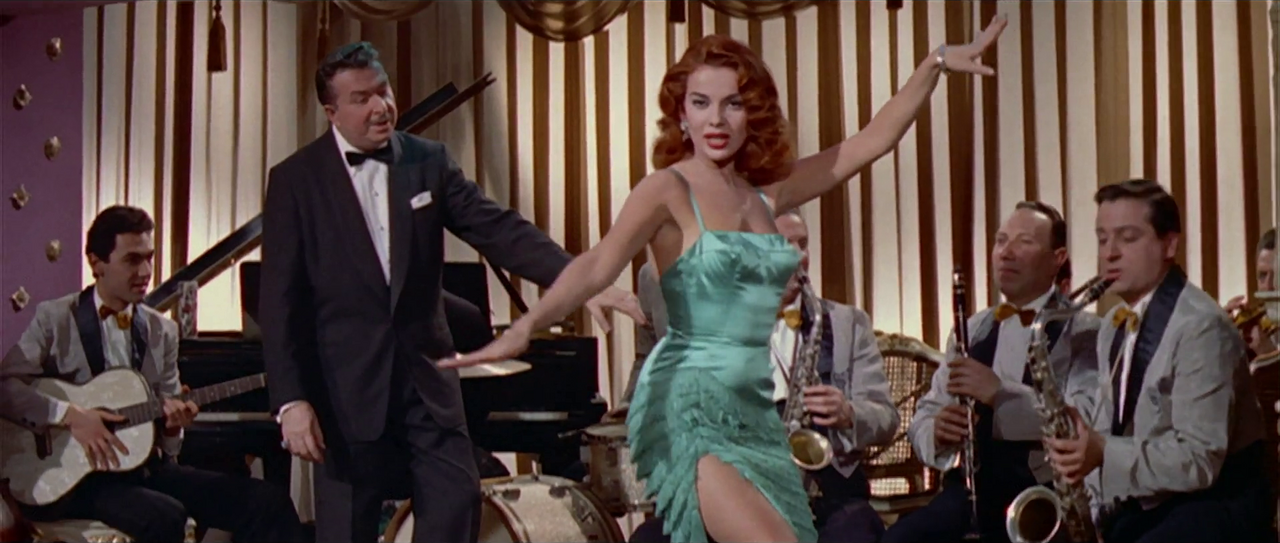
From 1933 to 1949 he led the Waldorf-Astoria Orchestra. His trademark gesture was holding a chihuahua while waving his baton. For opening acts he played 'My Shawl,' based on Catalan folk music. In 1941 a legal dispute by ASCAP proved a boon: Cugat used a library of over 500 non-society Latin tunes and was signed to the radio program Camel Caravan. His recording of 'Brazil' (1943) spent seven weeks at No. 2 on Billboard. He recorded for Columbia, RCA Victor, Mercury, and Decca. He hired Desi Arnaz, who later formed his own band. Cugat owned Casa Cugat restaurants in West Hollywood (1940s–1986) and New York (1958, lasted a year). He appeared in films including those with Esther Williams, such as 'Neptune's Daughter' (1949), which made him a household name.
Reader's Guide
Xavier Cugat's significance lies in his role as a primary conduit for Latin music entering the American mainstream during the mid-20th century. As the 'Rumba King,' he led the Waldorf-Astoria Orchestra for sixteen years, bringing rumba, conga, mambo, cha-cha-cha, and twist to a wide audience through radio, recordings, and film. His prolific output—over 150 recordings with the Waldorf-Astoria Orchestra alone—and his appearances in Hollywood movies, especially with Esther Williams, cemented his visibility. Cugat was a showman first, taking pride in making people dance and feel happy. He also nurtured talent, hiring Desi Arnaz and providing early recording opportunities for Dinah Shore. His career illustrates the fusion of entertainment, commerce, and cultural exchange, though his self-mythologizing complicates the historical record. His restaurants and caricature work further show his versatility. Cugat's legacy endures as a symbol of the popularization of Latin rhythms in the United States.
Did You Know?
- Cugat was a trained classical violinist and performed in Carnegie Hall in 1920 and 1922.
- He became one of the first solo musicians to play on radio, performing on WDY in Camden, N.J., in 1921.
- His recording of 'Brazil' spent seven weeks at No. 2 on the Billboard National Best Selling Retail Records chart in 1943.
- Cugat's restaurant Casa Cugat in West Hollywood operated from the 1940s until 1986.
Roots in Catalonia and the Havana Crucible
Xavier Cugat entered the world on New Year's Day 1900 in Girona, Catalonia, bearing the long family name Francesc d'Assís Xavier Cugat Mingall de Bru i Deulofeu. Though he would spend most of his adult life in the United States, he never abandoned his Catalan identity. His family relocated to Havana, Cuba, when he was just three, and it was there that his musical foundation was laid. He studied classical violin with serious intent and was already earning money as a violinist in a silent-movie theater by the age of nine. His talent carried him to the first-chair position in the Teatro Nacional Symphonic Orchestra, one of Havana's most prestigious ensembles. In quieter moments between performances, he filled pages with caricatures—a habit that would follow him for decades. In July 1915, the family boarded the SS Havana and landed in New York City, setting the stage for a career that would reshape American popular music. Cugat was also a self-mythologizer: he wove elaborate, sometimes entirely fictional anecdotes about encounters with Enrico Caruso and a brief marriage to Cuban theater star Rita Montaner, stories that later researchers carefully debunked.
From the Philharmonic Podium to the Cocoanut Grove
After a brief stint in New York, Cugat pursued his violin studies in Europe, giving recitals across the continent and touring Spain in the autumn of 1924. He returned to the United States disillusioned, sensing that a career as a concert soloist would not materialize. A chance offer to help an art dealer move a carload of paintings to Los Angeles redirected his path. In the city he became a featured soloist with the Los Angeles Philharmonic while simultaneously taking a job as a caricaturist for the Los Angeles Times. His drawings were nationally syndicated and appeared in Photoplay magazine under the byline 'de Bru.' It was while assigned to sketch the Mexican film star Dolores del Río that he accidentally produced a portrait of her understudy, Carmen Castillo. The two struck up a friendship, and Cugat began assembling a small ensemble for parties at her home. The group evolved into a professional act, and the couple married in 1929. By the late 1920s the band was a regular at the Cocoanut Grove club in the Ambassador Hotel, where a visit from Charlie Chaplin to dance the tango inspired Cugat to add tangos to the repertoire and recruit South American dancers, birthing the act known as 'Xavier Cugat and His Gigolos.'
The Waldorf Years and the Crown of the Rumba
In 1931 Cugat brought his orchestra to New York for the grand opening of the Waldorf-Astoria hotel, and two years later he succeeded Jack Denny as the hotel's resident bandleader. For the next sixteen years, until 1949, he commanded the Waldorf-Astoria Orchestra, building a reputation that made him the undisputed 'King of the Rumba' throughout the 1930s and 1940s. His stage persona was theatrical: he would hold a small chihuahua in one arm while conducting with the other, and every show opened with his original composition 'My Shawl,' a melody drawn from Catalan folk tradition. A 1941 ASCAP broadcast ban, which restricted most bands' access to popular songs, paradoxically became a windfall for Cugat, whose library of over five hundred non-society Latin titles kept his radio slots full. He was signed to the Camel Caravan program, which amplified his national profile. His recordings tracked every dance craze of the era—the conga, the mambo, the cha-cha-cha, the twist. 'Perfidia' broke through in 1940, and 'Brazil' became his signature chart success in 1943, spending seven weeks at number two on Billboard's national chart. He also became closely associated with the Cuban classic 'The Peanut Vendor,' performing and recording it with numerous artists over the years.
A Life Beyond the Bandstand
Cugat's influence extended well past the concert stage. Over a forty-year recording career he cut discs for Columbia, RCA Victor, Mercury, and Decca, leaving behind a vast catalog of Latin popular music that helped make the genre a mainstream force in American culture. He also became a restaurateur, operating establishments in both West Hollywood and New York, and he made numerous motion-picture appearances throughout the 1930s and 1940s, bringing his lively persona to the silver screen. His talent for caricature never faded; he continued drawing throughout his life, a creative outlet that had first emerged in Havana as a teenager filling spare moments between violin performances. His brother Francis, an artist in his own right, had painted the cover for F. Scott Fitzgerald's The Great Gatsby, underscoring the family's artistic lineage. Cugat remained a leading figure in the dissemination of Latin music across the United States, shuttling between the coasts for more than three decades. He passed away on October 27, 1990, leaving behind a legacy that wove together Catalan heritage, Cuban rhythm, and American showmanship into a distinctive cultural thread.
Gallery
Frequently Asked Questions
Who is Xavier Cugat?
Xavier Cugat was a Spanish-born American bandleader and classically trained violinist who became one of the most prominent figures in bringing Latin music to mainstream U.S. audiences in the twentieth century. He lived from 1900 to 1990 and was widely recognized by his nickname, the 'Rumba King.'
What role did Xavier Cugat play in Latin jazz?
Cugat served as the primary bridge between Cuban and Latin musical traditions and the broader American listening public during the 1930s and 1940s. Through his recordings, film appearances, and restaurant performances, he made rumba and other Latin rhythms a staple of American popular culture.
What was Xavier Cugat's connection to the Waldorf-Astoria?
He led the hotel's resident orchestra from 1933 to 1949, a position that gave him a high-profile stage in front of New York's elite. That role cemented his reputation and kept his Latin arrangements in the cultural spotlight for sixteen years.
Where was Xavier Cugat from and how did he end up in the U.S.?
He was born in Girona, Catalonia, Spain, in 1900, but his family relocated to Havana, Cuba, when he was still a child. He arrived in New York City in 1915 and eventually became a naturalized American citizen.
Why is Xavier Cugat important to the Latin jazz canon?
His four decades of prolific recording and his charismatic public persona made Latin rhythms accessible to millions of Americans who had never encountered them before. Without his cross-cultural work, the Latin jazz tradition might have remained far more insular in the mid-twentieth century.
More in Latin jazz musicians 1-24
Spotted an error? Know more?
This is a living reference — every entry is fact-audited, and reader corrections feed straight into our audit queue. Suggest an edit · See this site's audit record