
Willie Bobo
Versatile Latin jazz percussionist who crossed stylistic boundaries.

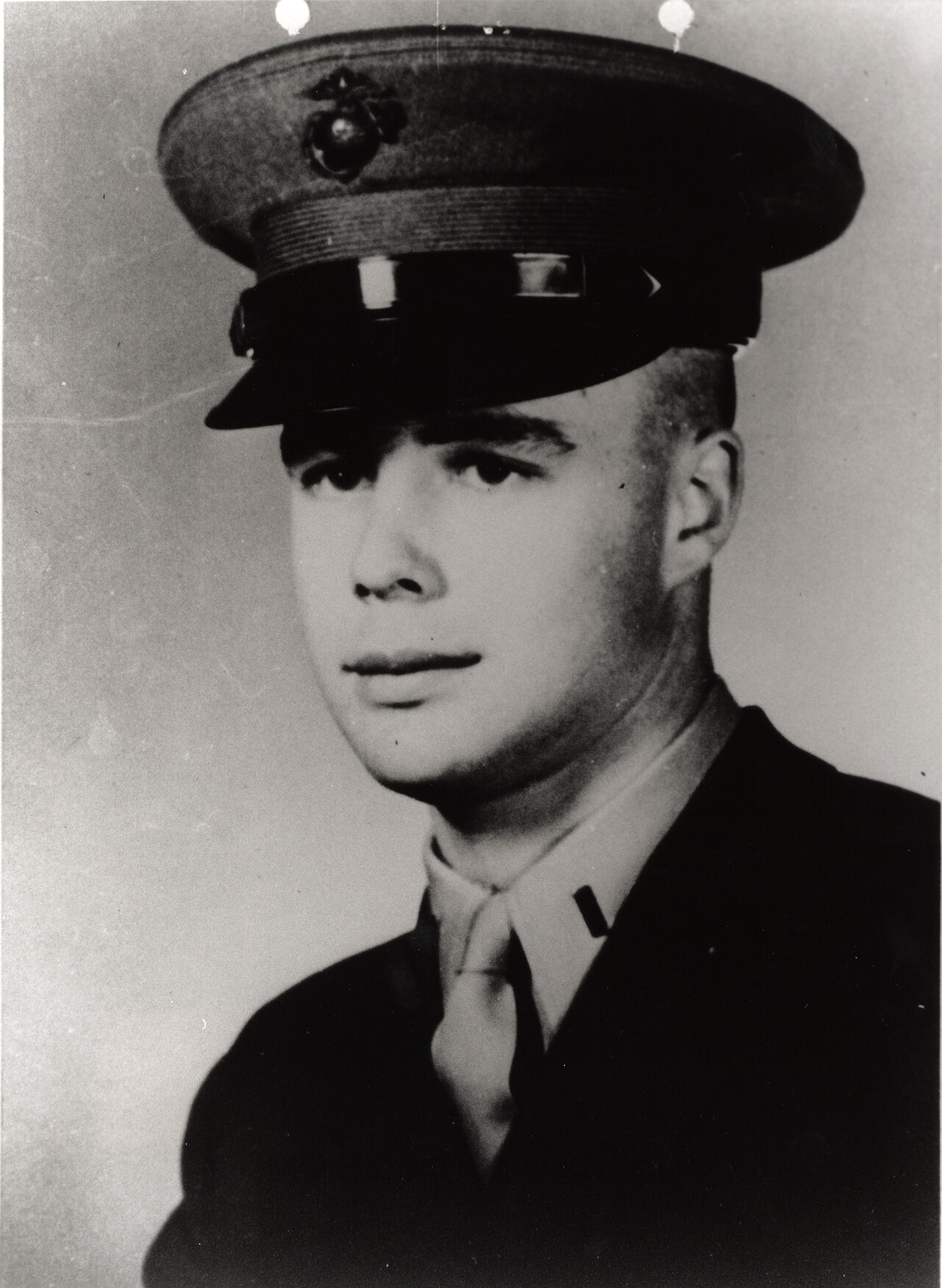
USMC · Public domain
William Correa, known as Willie Bobo (February 28, 1934 – September 15, 1983), was an American Latin jazz percussionist and drummer of Puerto Rican heritage. He pushed back against Latino music stereotypes and was admired for his range, working authentically in Latin percussion and jazz drumming while shifting between jazz, Latin, and R&B styles.
Growing up in Spanish Harlem, New York City, his father played the cuatro. As a teen, Bobo taught himself bongos, then congas, timbales, and drums. In 1947, he worked as a band boy for Machito to get into concerts, sometimes filling in on percussion. He started dancing professionally at 12 and made his recording debut on bongos at 14.
After Mongo Santamaría arrived in New York, Bobo studied with him and acted as his translator. In the early 1950s, he recorded with Mary Lou Williams, who reportedly gave him the nickname Bobo. From 1954 to 1957, he played percussion alongside Santamaría in Tito Puente’s band. He also joined George Shearing’s band for *The Shearing Spell*. After leaving Shearing, Cal Tjader brought Bobo and Santamaría into the Cal Tjader Modern Mambo Quintet, which released several albums during the late-1950s mambo craze. In 1960, Bobo reunited with Santamaría for the album *Sabroso!* on Fantasy. He then formed his own group, releasing *Do That Thing/Guajira* on Tico and *Bobo's Beat* and *Let's Go Bobo* on Roulette, but these didn't achieve major sales.
Following the success of Tjader’s *Soul Sauce*, in which Bobo played a key role, he formed a new band backed by Verve Records and released *Spanish Grease*, whose title track became his best-known song. This effort was highly successful, and he released six more albums on Verve. In 1969, he moved to Los Angeles, reconnected with longtime friend Richard Sanchez Sr. and his son Richard Jr., and began studio recording. He worked as a session musician for Carlos Santana and others, and was a regular in the band for Bill Cosby’s variety show *Cos*. Santana covered the song “Evil Ways” (written by Clarence “Sonny” Henry) on their 1969 debut album—though Willie Bobo had first recorded it in 1967, both versions are covers of the same Henry-penned tune, not a Bobo original. In the late 1970s, Bobo recorded for Blue Note and Columbia Records.
His youngest son, Eric Bobo (Eric Correa), is a percussionist with Cypress Hill and performed on the Beastie Boys’ 1
- known_for
- Versatility across jazz, Latin, and R&B; title track 'Spanish Grease'; session work with Carlos Santana and others; first to record 'Evil Ways' (written by Sonny Henry)
Lore & Background
Willie Bobo was born William Correa to a Puerto Rican family and grew up in Spanish Harlem, New York City. His father played the cuatro, a ten-stringed guitar-like instrument. As a teenager, Bobo taught himself the bongos and later the congas, timbales, and drums. In 1947, he began working as a band boy for Machito to gain entrance to concerts, sometimes filling in on percussion. At age 12, he started his professional career as a dancer, and two years later made his recording debut as a bongo player.
He met Mongo Santamaría shortly after Santamaría's arrival in New York and studied with him while acting as his translator. In the early 1950s, Bobo recorded with Mary Lou Williams, who is said to have first given him the nickname Bobo. From 1954 to 1957, he played with Tito Puente's band alongside Santamaría. Bobo later joined George Shearing's band on the album The Shearing Spell. After leaving Shearing, Cal Tjader asked Bobo and Santamaría to join the Cal Tjader Modern Mambo Quintet. Reuniting with Santamaría in 1960, the pair released the album Sabroso! for Fantasy. Bobo later formed his own group, releasing several albums without achieving huge market penetration.
After the success of Tjader's Soul Sauce, in which Bobo was heavily involved, he formed a new band with Verve Records, releasing Spanish Grease, the title track being perhaps his most well known tune. He released six more albums with Verve. In 1969, he moved to Los Angeles, worked as a session musician for Carlos Santana among others, and was a regular in the band for Bill Cosby's variety show Cos. Santana covered Bobo's Latin song 'Evil Ways' in 1969. In the late 1970s, Bobo recorded albums for Blue Note and Columbia Records. After a period of ill health, he died of cancer at age 49.
Reader's Guide
Willie Bobo's significance lies in his refusal to be confined by stereotypical expectations of Latino music, instead moving fluidly among jazz, Latin, and rhythm and blues. His work as a sideman with artists such as Miles Davis, Herbie Hancock, Wes Montgomery, and Cal Tjader placed him at the heart of the 1960s Latin jazz and soul-jazz scenes. His own album Spanish Grease and its title track became his most recognized work, and his percussion contributions to Tjader's Soul Sauce helped define that album's success. Bobo's legacy extends through his son Eric Bobo, a percussionist with Cypress Hill, and his grandson William Valen Correa, co-founder of the music nonprofit HNDP Los Angeles. His recordings continue to be sampled and featured in popular culture, such as the song 'Fried Neck Bones and Some Homefries' appearing in the 2006 video game Scarface: The World Is Yours.
Did You Know?
- Bobo taught himself the bongos as a teenager, later learning congas, timbales, and drums.
- Mary Lou Williams is said to have first given him the nickname Bobo.
- Carlos Santana covered Willie Bobo's Latin song 'Evil Ways' in 1969 on Santana's debut album.
- Bobo's song 'Fried Neck Bones and Some Homefries' was featured in the 2006 video game Scarface: The World Is Yours.
Roots in Spanish Harlem
Born William Correa on February 28, 1934, in the Spanish Harlem neighborhood of New York City, the future Willie Bobo grew up immersed in Puerto Rican musical traditions. His father played the cuatro, a ten-stringed instrument resembling a guitar, which likely planted early seeds of melodic awareness in the young boy. Rather than receiving formal instruction, the teenager taught himself the bongos and subsequently expanded his kit to include congas, timbales, and a full drum set. By 1947, he had found his way into the world of professional performance, working as a band boy for the legendary Machito—essentially using the role as a ticket into the concert hall, where he occasionally filled in on percussion when needed. His formal professional debut actually came earlier, at age twelve, as a dancer on stage, and two years later he made his first recording as a bongo player. After arriving in New York, he connected with Mongo Santamaría, studying under him while also serving as his English-language translator. In the early 1950s, a recording session with Mary Lou Williams proved pivotal; she is credited with coining the nickname Bobo that would follow him for the rest of his career.
A Percussionist Without Boundaries
Willie Bobo's career defied the narrow lane typically assigned to Latino musicians. From 1954 to 1957 he sat in the percussion section of Tito Puente's orchestra alongside his mentor Mongo Santamaría, and later joined George Shearing's ensemble for the album The Shearing Spell. When Cal Tjader assembled his Modern Mambo Quintet during the late-1950s mambo boom, Bobo and Santamaría were both recruited, and the group issued several records. After a 1960 reunion with Santamaría produced the Fantasy-label album Sabroso!, Bobo struck out solo, releasing Do That Thing/Guajira on Tico and Bobo's Beat and Let's Go Bobo on Roulette—records that never reached a wide audience. The breakthrough arrived when Tjader's Soul Sauce took off; riding that momentum, Bobo assembled a new group under Verve Records and delivered Spanish Grease, whose title track became his signature piece. He followed it with six additional Verve albums. In 1969 he relocated to Los Angeles, where he became a sought-after studio musician, laying tracks for Carlos Santana and serving as a regular on Bill Cosby's television variety show. By the late 1970s he was cutting records for Blue Note and Columbia, proving his rhythmic vocabulary spanned jazz, Latin, and rhythm-and-blues with equal fluency.
A Legacy That Keeps Playing
Even after his passing, Willie Bobo's musical DNA continues to ripple through the next generation. His youngest son, Eric Bobo (born Eric Correa), has followed his father into percussion, earning a spot in the hip-hop group Cypress Hill and contributing his drumming to the Beastie Boys' 1994 album Ill Communication. The lineage extends further: his grandson, William Valen Correa, co-founded HNDP Los Angeles, a music-based non-profit organization that carries forward the family's commitment to the arts. Bobo's recordings have also found new life in unexpected media. The track "Fried Neck Bones and Some Homefries," originally cut for the 1966 Verve album Uno Dos Tres 1•2•3, was licensed for the 2006 video game Scarface: The World Is Yours, introducing his grooves to a generation that may never have encountered Latin jazz in a club. A 2008 documentary, Willie Bobo: King Conga, further cemented his story for visual audiences. Posthumous releases such as Lost & Found (Concord Picante, 2006) and Dig My Feeling (Nacional Records, 2016) have continued to surface previously unheard or underappreciated material, ensuring that the percussionist who once filled in as a band boy for Machito remains very much a living presence in the music world.
The Sideman's Shadow and a Cut-Short Life
Perhaps no single fact about Willie Bobo's career illustrates his range more vividly than his sideman credits. His drumming and percussion appear on recordings with Miles Davis (Quiet Nights, Sorcerer), Herbie Hancock (Inventions and Dimensions), Wes Montgomery (Movin' Wes), Dexter Gordon (Landslide), and a long list of other jazz and Latin luminaries spanning the 1960s and 1970s. He contributed to Cal Tjader's landmark Soul Sauce, sat in with Tito Puente for Cuban Carnival, and even played on a 1975 drum session alongside Louie Bellson, Shelly Manne, and Paul Humphrey. This extraordinary breadth of collaboration speaks to a musician who rejected stereotypical expectations of Latino music and instead moved fluidly between jazz, Latin, and rhythm-and-blues contexts. Tragically, his story was cut short. After a period of declining health, Bobo succumbed to cancer on September 15, 1983, at the age of just forty-nine. He left behind a discography as leader stretching from 1963 to a posthumous 2016 release, a family that would carry his name into hip-hop and nonprofit work, and a body of recorded rhythm that spans more than five decades.
Gallery



Frequently Asked Questions
Who is Willie Bobo?
Willie Bobo (born William Correa, 1934–1983) was a Puerto Rican–American percussionist and drummer who became one of the most respected figures in Latin jazz. He grew up in Spanish Harlem, New York City, where his father's cuatro playing first exposed him to stringed music.
What instruments did Willie Bobo play?
Bobo taught himself bongos as a teenager and later added congas, timbales, and a full drum kit to his toolkit. His ability to move fluidly between Latin percussion and jazz drumming—sometimes within a single performance—set him apart from most of his peers.
What is Willie Bobo's most famous recording?
His 1969 title track 'Spanish Grease' is widely regarded as his signature statement, blending hard-driving Latin rhythms with a jazz-funk groove. He was also the first artist to record 'Evil Ways,' a song written by Sonny Henry, before it became a hit for Carlos Santana.
How did Willie Bobo first break into the music world?
In 1947, as a young teen, he worked as a band boy for bandleader Machito just to get backstage access to concerts. He would sometimes step in to fill in on percussion parts, giving him his earliest real performance experience.
Why is Willie Bobo considered important in Latin jazz?
Bobo actively resisted narrow stereotypes about what Latino musicians could do, insisting on equal fluency in jazz, Latin, and R&B idioms. His session work with artists like Carlos Santana and his own recordings demonstrated that a percussionist could anchor both a salsa ensemble and a jazz combo without sacrificing authenticity.
More in Latin jazz musicians 1-24
Spotted an error? Know more?
This is a living reference — every entry is fact-audited, and reader corrections feed straight into our audit queue. Suggest an edit · See this site's audit record