
Tito Alberti
Argentine jazz drummer and composer of a best-selling children's song.

Pompei, Alessandro, conte, 1705-1772; Sanmicheli, Michele; Balestra, Antonio, 16 · No restrictions
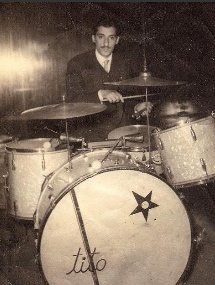
Tito Alberti (January 12, 1923 – March 25, 2009) was an Argentine jazz drummer. Born Juan Alberto Ficicchia in the port city of Zárate to an Argentine mother and a Sicilian father, he showed early musical talent, though the story that he formed a band at age seven with the Expósito brothers is unsubstantiated. Similarly, claims that Carlos Gardel was in the audience for a 1930 performance are apocryphal, as Gardel died in 1935. Alberti later drummed for the local Boy Scouts and studied formally at the Fracasi Conservatory under Tony Carvajales, but his father’s death in 1940 forced him to work at a Smithfield Foods abattoir. The job paid well enough for him to buy his first professional drum kit, and in 1942 he recorded *Azabache*—a well-known tango by Enrique Santos Discépolo, not a milonga by Homero Expósito—though the involvement of producer Miguel Caló is not documented. The recording’s success allegedly caught the attention of big band leader Raúl Marengo and, in 1944, Mexican songwriter Agustín Lara, but these connections lack canonical evidence.
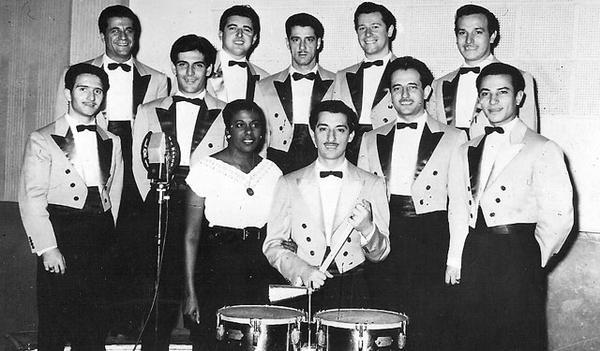
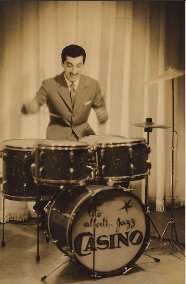
Radio appearances led to the pseudonym “Tito Alberti” and a close friendship with actress Eva Duarte. Her later relationship with Labor Minister Juan Perón helped fuel Argentina’s Peronist movement, and Alberti became an early adherent. He played with Ahmed Ratip’s “Cotton Pickers” and Mexican singer Jorge Negrete, then formed his first orchestra, Reveríe, in 1947. Reveríe performed at the Argentine Automobile Club’s auditorium and became known for Alberti’s children’s song “El elefante trompita,” which became one of the best-selling Spanish-language compositions in history. A recording contract with Phillips followed, and from 1949 he made regular guest appearances with Cuban mambo leaders Xavier Cugat and Dámaso Pérez Prado. In 1950, he created the “Jazz Casino” orchestra with José Finkel, and on May 1 of that year President Perón commissioned them to lead International Labor Day festivities. Jazz Casino performed with pianist Hugo La Rocca on Argentine television’s first broadcast in 1951 and continued to lead May Day celebrations until Perón’s 1955 overthrow.
The orchestra toured Latin America until 1957, fusing Caribbean steel drum sounds with Latin jazz in a style Alberti called Dengue. After disbanding, he joined Cuban poet Nicolás Guillén in a 1958 touring show, Tambores Cubanos. Returning to Argenti
- born
- January 12, 1923
- died
- March 25, 2009
- field
- Jazz drummer, bandleader
- nationality
- Argentine
- known_for
- Reveríe orchestra, 'El elefante trompita', Jazz Casino, Dengue fusion style
Lore & Background
Tito Alberti was born Juan Alberto Ficicchia in Zárate to an Argentine mother and a Sicilian father. Early stories of him forming a band at age 7 with Virgilio and Homero Expósito, or performing for Carlos Gardel in 1930, are not supported by reliable sources. He later trained at the Fracasi Conservatory under Tony Carvajales, but his father's death in 1940 forced him to work at a Smithfield Foods abattoir, where he saved for his first professional drum kit. In 1942 he recorded 'Azabache'—a tango by Enrique Santos Discépolo—though claims of producer Miguel Caló's involvement or attention from Raúl Marengo and Agustín Lara remain unverified.
Reader's Guide
Alberti's significance lies in his role as a pioneering Argentine jazz drummer and bandleader who bridged popular and traditional music. His 1947 composition 'El elefante trompita' became a global best-seller, while his orchestra Jazz Casino, formed in 1950, performed at official Peronist May Day festivities and for Argentine television's first broadcast. His fusion of Caribbean steel drums with Latin jazz, which he called Dengue, influenced Latin American music. Despite losing his fortune in the 1981 brokerage collapse, he returned to the stage in 1998 with a Chicago jazz sextet. Named an Illustrious Citizen of Buenos Aires Province in 1999, his legacy continues through his sons, including Charly Alberti, drummer for Soda Stereo.
Did You Know?
- Alberti is often said to have formed his first band at age 7 with two brothers, Virgilio and Homero Expósito, though this is not confirmed by historical records.
- He worked at a Smithfield Foods abattoir after his father's death to save for his first drum kit.
From Zárate's Café to the Drum Kit
Born Juan Alberto Ficicchia in the port city of Zárate in 1923, the future drummer grew up in a household that blended Argentine and Sicilian heritage. His early musical life was anything but solitary: at just seven years old, he assembled a small ensemble with two brothers, Virgilio and Homero Expósito, who owned a well-known local café. The trio performed there regularly—Virgilio on piano, Homero on ukulele, and the young Tito on drums. One evening in 1930, the legendary tango singer Carlos Gardel happened to be among the listeners. As he grew older, Alberti drummed for the local Boy Scouts and enrolled at the Fracasi Conservatory, studying under Tony Carvajales, a respected jazz drummer of the era. That formal education, however, was interrupted when his father died in 1940. The teenager had to take a job at Zárate's Smithfield Foods abattoir, a well-paying position that ultimately let him buy his first professional drum kit. In 1942, producer Miguel Caló invited him to record a milonga composed by his old friend Homero Expósito, and the success of that session set his professional career in motion.
Radio Fame, Political Ties, and the Birth of Reveríe
By the mid-1940s, Alberti had caught the ear of Buenos Aires big-band leader Raúl Marengo and, in 1944, the internationally celebrated Mexican songwriter Agustín Lara. Frequent radio appearances across Argentina earned him the stage name "Tito Alberti" and a close personal friendship with Eva Duarte, a moderately successful matinée actress. Her later marriage to Labor Minister Juan Perón helped launch the Peronist movement, and Alberti counted himself among its earliest supporters. His professional roster continued to grow: he played with Ahmed Ratip's popular swing group, the Cotton Pickers, and accompanied Mexican folklore star Jorge Negrete. In 1947 he formed his own orchestra, Reveríe, and took it to the large auditorium of the Argentine Automobile Club. The ensemble became famous for a playful children's tune, "El elefante trompita" (Trunky the Elephant), which went on to become one of the best-selling Spanish-language compositions ever recorded. That hit secured him a recording contract with Phillips and opened the door to regular guest sessions with Cuban mambo leaders Xavier Cugat and Dámaso Pérez Prado starting in 1949.
Jazz Casino, Dengue, and a Decade of Dominance
In 1950 Alberti partnered with José Finkel to create the Jazz Casino orchestra. On May 1 of that year, President Perón commissioned the group to headline International Labor Day celebrations, and in 1951 they performed with guest pianist Hugo La Rocca during Argentine television's very first broadcast. They continued leading official May Day events until Perón's overthrow in 1955. The ensemble toured Latin America through 1957, developing a distinctive sound that blended Caribbean steel-drum rhythms with Latin jazz—a fusion Alberti called Dengue. After the group disbanded, he joined Cuban poet Nicolás Guillén for a touring literary-musical show called Tambores Cubanos in 1958. Back in Argentina, his Tito Alberti Orchestra became the top-grossing musical ensemble in its genre, a position it held until 1970. The band played roughly fifty shows per month, headlined major local carnivals, and even performed Hasidic music for Israeli Prime Minister Golda Meir. The relentless touring schedule, combined with Alberti's growing reliance on narcotics, eventually forced him to retire on health grounds.
Loss, Comeback, and a Musical Legacy
The early 1980s dealt a severe financial blow: the collapse of Argentina's unregulated brokerage houses during Economy Minister José Alfredo Martínez de Hoz's tenure wiped out Alberti's fortune, including a yacht and a collection of four roadsters. For nearly two decades he stayed largely out of the public eye. Then, at age seventy-six, he made a surprising return to the stage in 1998, joining a Chicago jazz sextet for a successful revival tour. A second, briefer comeback followed in 2005 at Zárate's Teatro Coliseo. In 1999, the Province of Buenos Aires had named him an Illustrious Citizen, a recognition of his decades-long contribution to Argentine music. Weakened by a kidney condition, Tito Alberti passed away on March 25, 2009, at the age of eighty-six. He is survived by his wife Martha and two sons, both of whom followed musical paths; his son Charly Alberti served for several years as the drummer for the Argentine rock band Soda Stereo, carrying the family's rhythmic tradition into a new genre.
Gallery
Frequently Asked Questions
Who is Tito Alberti?
Tito Alberti was an Argentine jazz drummer and bandleader born in 1923 in the port town of Zárate. He performed under that stage name rather than his birth name, Juan Alberto Ficicchia, and became known both for his jazz work and a widely popular children's song.
What is 'El elefante trompita'?
It is a best-selling children's song composed by Tito Alberti that gave him a broad audience well beyond the Argentine jazz scene. The tune remains one of the most recognizable pieces he ever wrote.
What was the Reveríe orchestra?
The Reveríe orchestra was the ensemble most closely linked to Tito Alberti and the main vehicle for his drumming and compositional output. Through that group he helped shape the sound of Argentine jazz during his active career.
What is the 'Dengue fusion style' associated with Tito Alberti?
It refers to a distinctive blend of jazz and Latin rhythmic elements that Alberti developed, particularly in his performances at the Jazz Casino. This hybrid approach helped distinguish his sound from other musicians working in the Argentine jazz scene of his era.
Where did Tito Alberti train as a drummer?
He studied formally at the Fracasi Conservatory under the instructor Tony Carvajales. Before that conservatory work, he had already been drumming for local Boy Scout groups in his hometown of Zárate.
More in Latin jazz musicians 1-24
Spotted an error? Know more?
This is a living reference — every entry is fact-audited, and reader corrections feed straight into our audit queue. Suggest an edit · See this site's audit record